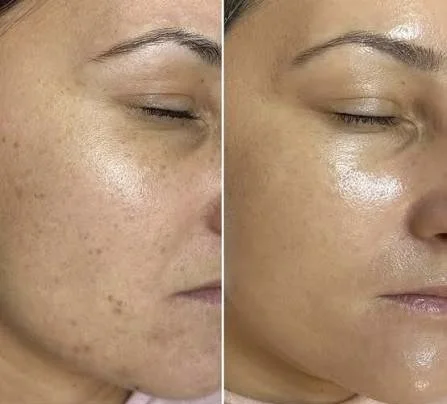
Professional Chemical Peels
Targeted skin resurfacing for acne, pigmentation, texture and overall skin health
Chemical peels are professional skin treatments designed to improve acne-prone skin, congestion, uneven pigmentation, rough texture and visible signs of ageing through controlled exfoliation.
At Peau Skin Health, I primarily use superficial chemical peels, which work within the epidermis (the outermost layer of the skin) to encourage the shedding of accumulated surface cells and support epidermal renewal.
Despite the name, a chemical peel doesn't necessarily mean your skin will visibly peel afterwards. Modern superficial peels can be effective without requiring aggressive exfoliation, significant discomfort or prolonged downtime.
I work with a selection of professional formulations, including Medik8 chemical peels and advanced Korean peeling systems, allowing me to tailor each treatment to the skin in front of me.
Rather than using the same peel for everyone, I consider your skin type, concerns, sensitivity, current skincare and treatment history before selecting the most appropriate formulation.
Whether your main concern is acne, pigmentation, dullness, uneven texture or congestion, the aim is to achieve meaningful improvements while maintaining the health and integrity of your skin barrier.
How Do Chemical Peels Work?
Chemical peels use carefully selected exfoliating ingredients to encourage the removal of accumulated skin cells from the epidermis.
Our skin naturally renews itself through a continuous process of cell production, maturation and shedding.
As we age, epidermal turnover can become less efficient, contributing to rough texture, dullness and a less even-looking complexion.
Certain skin conditions, including acne and pigmentation disorders, can also affect how skin cells behave and how pigment is distributed.
Chemical peels work by altering the connections between cells in the outer layers of the skin, encouraging controlled exfoliation and revealing a smoother, more even-looking surface.
Depending on the formulation, chemical peels may also influence:
Epidermal renewal: Encouraging the removal of accumulated surface cells.
Pigment distribution: Helping reduce the appearance of uneven pigmentation.
Comedone formation: Supporting clearer pores and reducing congestion.
Skin texture: Improving roughness and surface irregularities.
Inflammatory activity: Certain ingredients may have additional anti-inflammatory properties.
Fine lines: Repeated superficial treatments may gradually improve the appearance of fine surface lines.
The depth and intensity of a peel depend on much more than the percentage of acid used.
The type of acid, formulation, pH, application technique, number of layers and length of contact with the skin all influence how a peel behaves.
A higher percentage doesn't automatically mean a better treatment.
Why I Primarily Use Superficial Chemical Peels
Chemical peels are generally classified as superficial, medium-depth or deep, depending on how far their effects extend into the skin.
Superficial peels work primarily within the epidermis, making them particularly useful for addressing acne-related congestion, pigmentation, dullness and uneven surface texture.
Medium and deep peels penetrate further and can produce more significant changes, but they also involve greater downtime and an increased risk of complications.
For many common skin concerns, particularly when treating skin regularly, superficial peels offer an effective and more manageable approach.
Their benefits include:
Minimal downtime with many formulations
Lower risk of complications compared with deeper peels
Treatment intensity that can be adjusted to skin tolerance
Suitability for repeated treatments when appropriate
The ability to target different concerns using different formulations
Gradual improvements without unnecessarily aggressive resurfacing
I don't believe that stronger automatically means better.
The aim is to achieve the desired biological response without creating unnecessary inflammation or compromising the skin barrier.
Different Acids, Different Benefits
Not all chemical peels work in the same way.
Different acids have different molecular structures, penetration characteristics and biological effects, which is why choosing the right formulation matters.
Glycolic Acid – Texture, Pigmentation and Acne
Glycolic acid is an alpha hydroxy acid (AHA) commonly used to improve uneven skin texture, dullness, superficial pigmentation and certain acne-related concerns.
Its relatively small molecular size contributes to its ability to penetrate the outer layers of the skin.
Glycolic acid encourages exfoliation by reducing cohesion between surface skin cells, helping improve smoothness and radiance.
It can be particularly useful for:
Uneven skin tone
Sun-related pigmentation
Rough skin texture
Dullness
Fine surface lines
Mild acne and congestion
Post-acne marks
Lactic Acid – Gentle Exfoliation and Hydration
Lactic acid is another AHA, often used in formulations designed for skin requiring a gentler approach.
Alongside its exfoliating properties, lactic acid is associated with skin hydration and forms part of the skin's natural moisturising factor system.
Depending on the formulation and concentration, it may be useful for:
Dry or dehydrated skin
Dullness
Mild pigmentation
Uneven texture
Skin requiring a more gradual approach to exfoliation
Mandelic Acid – Acne, Congestion and Uneven Skin Tone
Mandelic acid is an AHA with a larger molecular structure than glycolic acid.
It is often incorporated into formulations intended for gradual exfoliation and may be useful for clients experiencing acne, congestion, uneven skin tone or post-inflammatory pigmentation.
Potential benefits include:
Mild acne-prone skin
Congested pores
Uneven texture
Post-inflammatory hyperpigmentation
Dullness
Oily or combination skin
Salicylic Acid – Acne, Blackheads and Oily Skin
Salicylic acid is a beta hydroxy acid (BHA) with oil-soluble properties.
This makes it particularly useful in formulations designed for oily, acne-prone or congested skin.
It helps loosen accumulated cells and debris within pores and has additional anti-inflammatory properties.
It may be useful for:
Blackheads and whiteheads
Comedonal acne
Congested pores
Oily skin
Mild inflammatory acne
Uneven texture associated with congestion
Salicylic acid is particularly relevant when treating acne because abnormal shedding of cells within the hair follicle contributes to the formation of comedones.
By helping reduce this accumulation, salicylic acid peels may support clearer skin and complement an appropriate acne skincare routine.
Other Advanced Peel Formulations
Alongside traditional AHAs and BHAs, modern professional chemical peels may incorporate additional exfoliating acids, combinations of active ingredients and specialised delivery systems.
Some formulations are designed to provide gradual epidermal renewal, while others focus more specifically on acne, pigmentation, congestion or overall skin radiance.
The choice of peel is based on the formulation as a whole, rather than simply the name or percentage of one ingredient.
Chemical Peels for Acne and Breakouts
Supporting clearer skin through targeted exfoliation
Acne is a common inflammatory skin condition involving the hair follicles and sebaceous glands.
It develops through several interacting biological processes, including:
Excess sebum production: Increased oil production can contribute to the formation of blocked follicles.
Abnormal follicular keratinisation: Skin cells accumulate within the follicle rather than shedding normally.
Cutibacterium acnes: This naturally occurring skin bacterium can contribute to inflammatory activity within acne-prone follicles.
Inflammatory signalling: Immune responses within the skin contribute to the development of inflammatory spots.
Hormonal influences, genetics and certain skincare products can also play a role.
Chemical peels primarily target the accumulation of cells within the follicle and on the skin's surface.
Depending on the formulation, they may also help reduce oiliness and support the appearance of calmer, clearer skin.
What Types of Acne Can Chemical Peels Help?
Blackheads and whiteheads
Also known as comedonal acne, these develop when follicles become blocked with sebum and accumulated skin cells.
Salicylic acid and other suitable peeling formulations can help reduce congestion and improve the appearance of blocked pores.
Mild inflammatory acne
Certain chemical peels may help improve mild inflammatory breakouts, particularly when incorporated into a wider acne management programme.
Hormonal acne
Hormonal acne often involves deeper inflammatory lesions, particularly around the chin and jawline.
Although superficial peels may help manage associated congestion and post-inflammatory marks, they do not address the underlying hormonal influences.
Persistent congestion
Not all congested skin is necessarily acne.
Some clients experience blackheads, enlarged-looking pores or uneven texture without significant inflammatory breakouts.
Superficial chemical peels can be useful for improving these concerns.
Chemical Peels Aren't Always the First Step
Although chemical peels can be beneficial for acne-prone skin, they aren't automatically the best treatment for everyone experiencing breakouts.
For some clients, a consistent skincare routine incorporating evidence-based ingredients such as adapalene, benzoyl peroxide or azelaic acid may provide greater long-term benefit.
Introducing too many exfoliating treatments alongside prescription acne products can also increase irritation and compromise the skin barrier.
For moderate, severe, painful or scarring acne, medical assessment and appropriate treatment should take priority.
At Peau Skin Health, I assess whether a chemical peel is genuinely likely to benefit your skin or whether a different approach would be more appropriate.
Chemical Peels for Acne Marks and Acne Scarring
One of the most common concerns following acne is the appearance of marks left behind after breakouts have resolved.
However, not all acne marks are scars.
Understanding the difference is important because different types of marks respond to different treatments.
Post-Inflammatory Hyperpigmentation
Post-inflammatory hyperpigmentation (PIH) appears as brown or darker-coloured marks following inflammation.
These develop when inflammation stimulates excess melanin production.
Superficial chemical peels may help improve epidermal post-inflammatory pigmentation by encouraging the removal of melanin-containing cells.
Post-Inflammatory Erythema
Post-inflammatory erythema (PIE) appears as persistent pink, red or purplish marks following acne.
Unlike brown pigmentation, these marks are primarily associated with vascular changes rather than excess melanin.
Chemical peels are generally less effective for persistent vascular redness, and other treatments may be more appropriate.
Atrophic Acne Scarring
Indented acne scars, including rolling, boxcar and ice-pick scars, develop when inflammation damages deeper skin structures and results in a loss of supporting tissue.
Superficial chemical peels cannot reliably correct these deeper structural changes.
For established acne scarring, treatments such as microneedling or fractional laser resurfacing may be more appropriate, depending on the scar type.
Chemical Peels for Pigmentation
One of the most useful applications of superficial chemical peels
Pigmentation is one of the most common concerns I see in clinic, and chemical peels can be particularly useful for improving uneven skin tone.
Excess pigmentation develops when melanin production, distribution or clearance becomes disrupted.
This can occur for several reasons, including ultraviolet exposure, hormonal influences and inflammation.
Chemical peels can help improve the appearance of certain types of pigmentation by encouraging the removal of melanin-containing cells from the epidermis.
They may be useful for:
Sun damage and sunspots
Superficial peels can help improve the appearance of uneven pigmentation associated with cumulative sun exposure.
Post-inflammatory hyperpigmentation
Dark marks left behind following acne, breakouts or other inflammatory skin events may gradually improve with carefully selected superficial peels.
Melasma
Chemical peels may be used as an additional treatment for selected cases of melasma, although results vary considerably.
Melasma is a complex, frequently recurring pigmentation condition influenced by several factors, including hormones, ultraviolet radiation, visible light and inflammatory pathways.
Because inflammation can worsen melasma, aggressive peeling is not always appropriate.
For clients with melasma, I generally favour a cautious approach that prioritises daily sun protection, appropriate topical skincare and carefully selected treatments.
Uneven skin tone and dullness
Superficial peels can help improve overall radiance and create a more even-looking complexion by encouraging the removal of accumulated surface cells.
It is important to distinguish between different types of pigmentation, as not every pigment concern responds equally well to chemical peels.
Deeper dermal pigmentation, for example, is less likely to respond to superficial exfoliation alone.
Chemical Peels for Skin Texture and Fine Lines
As we age, changes in epidermal renewal, hydration and collagen structure can contribute to roughness, fine lines and uneven skin texture.
Superficial chemical peels primarily work on the epidermis, making them particularly useful for improving surface smoothness and radiance.
Repeated treatments may also produce modest improvements in fine lines and overall skin quality.
However, superficial peels should not be confused with deeper collagen-remodelling treatments.
For more significant textural concerns, acne scarring or skin laxity, treatments such as microneedling or fractional resurfacing may be more appropriate.
The most effective treatment depends on which structures within the skin need to be addressed.
Are Chemical Peels Suitable for Sensitive Skin?
Not all sensitive skin needs to avoid chemical peels, but not all sensitive skin should be exfoliated either.
Some formulations are designed to provide gentler exfoliation, and treatment intensity can often be adjusted.
However, skin experiencing active irritation, a compromised barrier, significant inflammation or certain dermatological conditions may not be suitable for peeling.
For clients with rosacea-prone skin, eczema-prone skin or a history of perioral dermatitis, treatment suitability requires particular consideration.
In some cases, supporting the skin barrier and reducing inflammation should take priority over exfoliation.
At Peau Skin Health, I would rather postpone a chemical peel than perform a treatment that is unlikely to benefit the skin in its current condition.
What Happens During a Chemical Peel?
Every chemical peel begins with an assessment of your skin and current skincare routine.
This is particularly important if you use prescription retinoids, exfoliating acids or other ingredients that may influence skin sensitivity.
The skin is cleansed and prepared before the selected peel formulation is applied.
Depending on the peel, you may experience tingling, warmth or mild stinging during application.
The peel is then neutralised or removed according to the manufacturer's protocol, and appropriate post-treatment skincare is applied.
Treatment strength, application time and the number of layers are adjusted according to the formulation and your skin's response.
What Is the Downtime?
Downtime varies depending on the peel selected, its strength and your individual skin response.
With many superficial chemical peels, downtime is minimal.
You may experience:
Mild redness immediately after treatment
Temporary tightness or dryness
Light flaking over the following days
Increased sensitivity to active skincare ingredients
Occasional visible peeling, depending on the formulation
Not every chemical peel causes visible shedding.
Visible peeling is not a measure of treatment success.
Some of the most useful superficial peels produce very little visible exfoliation while still encouraging epidermal renewal.
Following treatment, appropriate moisturisation, gentle skincare and daily broad-spectrum SPF are particularly important.
How Many Chemical Peels Will I Need?
The number of treatments depends on your skin concerns, the formulation selected and the response of your skin.
Some clients notice improvements in radiance and smoothness following a single treatment.
For concerns such as acne, pigmentation, congestion or uneven texture, a course of treatments is often more beneficial.
Superficial chemical peels are commonly performed at intervals of approximately two to four weeks, although this varies depending on the formulation and treatment protocol.
Maintenance treatments may also be incorporated into a longer-term skin programme.
Chemical peels are rarely a substitute for consistent home skincare, particularly when treating acne or pigmentation.
Daily sun protection and appropriate topical ingredients are essential for maintaining results.
A Tailored Approach to Chemical Peels
At Peau Skin Health, I don't work from a one-size-fits-all chemical peel menu.
I use a selection of professional formulations, including Medik8 peels and advanced Korean chemical peeling systems, chosen according to the skin in front of me.
Your skin type, acne activity, pigmentation, sensitivity, current products, treatment history and longer-term goals all influence which peel I select.
Some clients benefit from a targeted peel designed to address acne, pigmentation or congestion.
Others may need a gentler approach focused on improving texture and radiance.
And sometimes, the most appropriate recommendation is not to peel the skin at all.
The aim is always to achieve meaningful improvements without unnecessarily compromising the skin barrier.
Professional Chemical Peels in Oxfordshire & the Cotswolds
Peau Skin Health offers personalised chemical peel treatments in Stonesfield, near Woodstock and Chipping Norton, Oxfordshire, serving clients across the surrounding Cotswolds.
Whether you're concerned about acne, blackheads, congestion, pigmentation, sun damage, melasma, post-acne marks, uneven texture or dull skin, your treatment will be selected according to your individual skin needs.
My approach combines professional treatments with realistic expectations, evidence-informed skincare and a focus on maintaining long-term skin health.