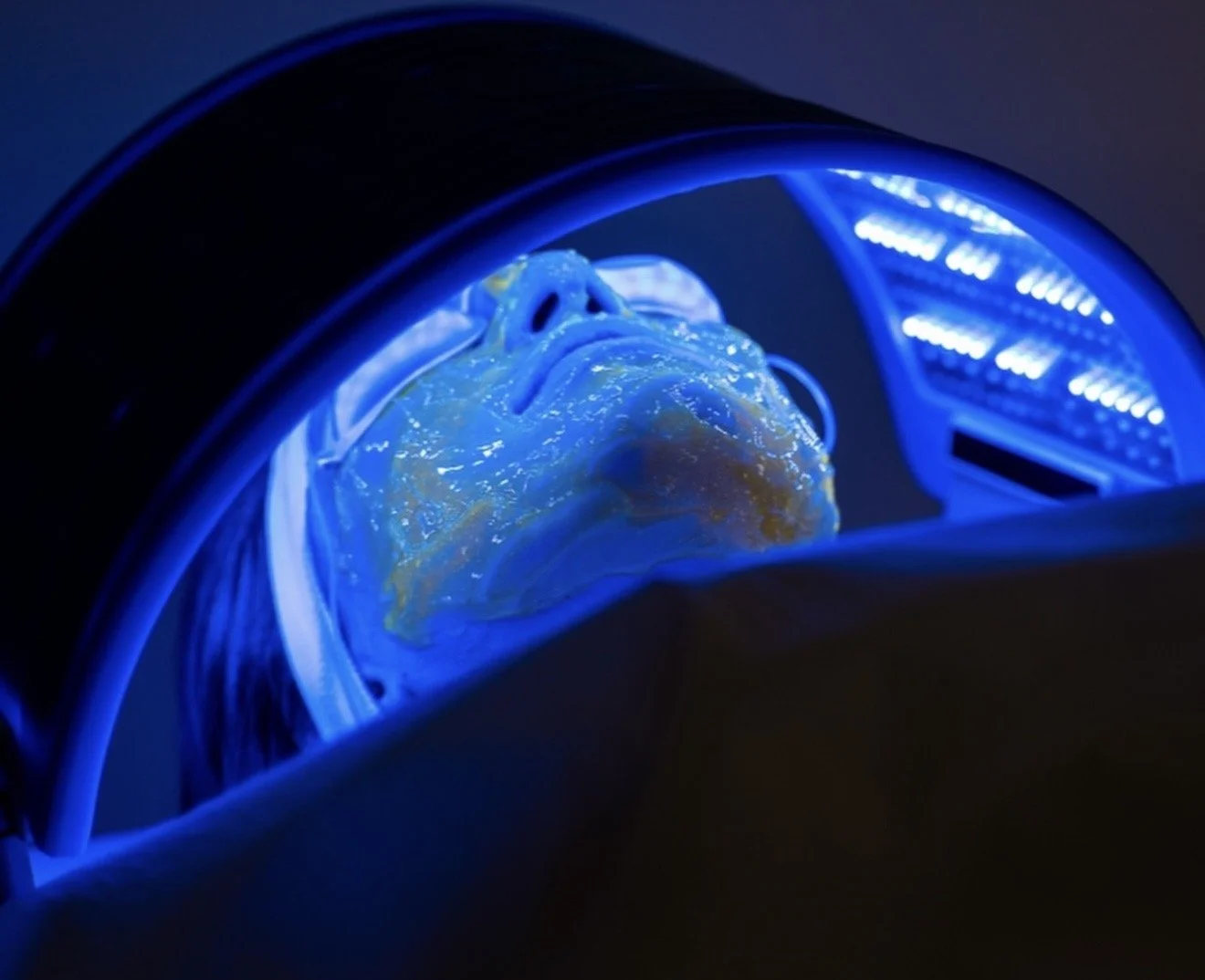
Lumixa – Advanced Fluorescent Light Energy Therapy
The next generation of light-based skin rejuvenation
Lumixa is an advanced, non-invasive skin treatment that uses patented Fluorescent Light Energy (FLE) technology to support cellular regeneration, collagen production and the regulation of inflammation within the skin.
Unlike traditional LED phototherapy, which delivers specific wavelengths of light directly to the skin, Lumixa uses a specially formulated photoconverter gel to transform LED light into a broader spectrum of fluorescent energy.
This process, known as photoconversion, produces multiple wavelengths of light capable of interacting with different structures and biological processes within the skin.
The result is a sophisticated form of photobiomodulation designed to improve skin health, support repair mechanisms and address concerns including premature ageing, facial redness, inflammation, sensitive skin and compromised skin quality.
Lumixa may also be considered for people with rosacea-prone skin, eczema-prone skin or a history of perioral dermatitis, where suitability depends on the current condition of the skin. It is not a replacement for medical treatment of these conditions.
At Peau Skin Health in Stonesfield, near Woodstock and Chipping Norton, Oxfordshire, Lumixa is offered as a standalone treatment or incorporated into personalised skin treatment programmes.
How Does Lumixa Work?
The science of fluorescent light energy
Lumixa works through a biological process called photobiomodulation (PBM), where light energy influences cellular activity without deliberately damaging or removing skin tissue.
The technology involves three stages:
1. Photoconverter Gel Application
A specialised gel containing light-sensitive molecules called chromophores is applied to the skin.
These molecules are capable of absorbing light energy and subsequently re-emitting it at different wavelengths.
The gel remains on the skin's surface rather than being absorbed into the tissue.
2. Light Activation and Photoconversion
The gel is illuminated using a professional LED light source.
Depending on the Lumixa formulation, blue or red LED light activates the chromophores, triggering a process called fluorescence.
Through a phenomenon known as the Stokes shift, absorbed photons are re-emitted at longer wavelengths, producing a broader spectrum of fluorescent light energy.
Unlike conventional LED therapy, which relies on the wavelengths emitted directly by the device, Lumixa introduces an additional photoconversion stage.
3. Cellular Photobiomodulation
The resulting fluorescent energy interacts with light-sensitive structures within the skin.
Research into fluorescent light energy suggests that this process can influence several important cellular pathways, including:
Mitochondrial activity: Supporting cellular energy metabolism and processes involved in tissue repair.
Fibroblast activity: Influencing the cells responsible for producing collagen and other components of the extracellular matrix.
Inflammatory signalling: Modulating biological pathways involved in inflammation and skin recovery.
Cellular regeneration: Supporting processes associated with tissue maintenance and repair.
Extracellular matrix remodelling: Encouraging biological activity involved in maintaining skin structure, elasticity and resilience.
Rather than creating a controlled injury to trigger repair, as treatments such as microneedling and fractional laser do, Lumixa aims to influence cellular behaviour through light-mediated biological signalling.
This makes it particularly interesting for clients whose skin may not tolerate more intensive treatments, including those experiencing sensitivity, dryness, redness or a compromised skin barrier.
More Than Traditional LED Light Therapy
LED phototherapy is already widely used in dermatology and aesthetic treatments for its ability to influence cellular activity.
However, Lumixa takes a different approach.
Traditional LED devices emit selected wavelengths of light, which interact with specific light-absorbing molecules within the skin.
Lumixa combines LED activation with a photoconverter gel, generating a broader, polychromatic spectrum of fluorescent light.
Different wavelengths have different optical properties and penetration characteristics, allowing light to interact with biological targets at varying depths.
This additional photoconversion process distinguishes Lumixa from conventional LED therapy.
Research has demonstrated promising biological effects from fluorescent light energy, although larger comparative clinical trials are still needed to establish how much additional benefit it provides over high-quality LED phototherapy alone.
Three Targeted Lumixa Treatments
Lumixa offers three specialised formulations, allowing treatments to be selected according to individual skin concerns.
Lumixa Skin Normaliser
For redness, inflammation, sensitive skin and skin barrier support
Skin Normaliser is designed to help restore balance to skin experiencing visible inflammation, redness, sensitivity or signs of a compromised skin barrier.
Using blue LED activation and fluorescent light energy, this treatment aims to influence inflammatory pathways and support the skin's natural recovery processes.
It may be particularly suited to:
Redness-prone and rosacea-prone skin
Sensitive and reactive skin
Eczema-prone skin when the condition is stable
Skin with a history of perioral dermatitis, following individual assessment
Irritated or sensitised skin
Skin experiencing inflammatory breakouts
Dry, stressed or compromised skin
Supporting skin barrier recovery
Supporting skin resilience and overall skin health
Preparing the skin for more intensive treatments, where appropriate
Skin Normaliser is particularly interesting for its potential to modulate inflammatory activity without relying on aggressive exfoliation or controlled tissue injury.
For clients experiencing chronic skin sensitivity, facial redness or inflammatory skin concerns, a gentler approach may be preferable to repeatedly introducing stronger active ingredients or resurfacing treatments.
Although Lumixa does not replace appropriate medical treatment for conditions such as rosacea, eczema or perioral dermatitis, it may be considered as part of a wider skin health programme when the condition is stable and treatment is appropriate.
Lumixa Collagen Booster
For skin texture, collagen stimulation and preventative ageing
Collagen Booster focuses on supporting fibroblast activity and the biological processes involved in collagen synthesis.
Fibroblasts are specialised cells within the dermis responsible for producing collagen, elastin-associated matrix components and other structural proteins that help maintain the skin's strength and resilience.
As we age, fibroblast activity and collagen production gradually decline, contributing to changes in skin firmness, texture and elasticity.
Fluorescent light energy has demonstrated the ability to influence collagen-related activity in laboratory studies, making it a promising approach to non-invasive skin rejuvenation.
Ideal for:
Early signs of skin ageing
Fine lines
Changes in skin texture
Dull or tired-looking skin
Supporting skin firmness and elasticity
Preventative skin maintenance
Maintaining overall skin quality
Clients seeking gentle collagen stimulation without invasive procedures
Collagen Booster can also complement other collagen-stimulating treatments within a carefully planned skin programme.
Lumixa Age Control
For advanced skin rejuvenation and visible signs of ageing
Age Control uses red LED activation to generate fluorescent light energy across a broader spectrum of wavelengths.
Red-light-activated fluorescent energy is of particular interest in photobiomodulation because of its potential to influence biological processes associated with tissue repair and skin rejuvenation.
Age Control is designed to address more established signs of skin ageing, including:
Fine lines and wrinkles
Reduced skin firmness
Changes in elasticity
Uneven skin texture
Dullness and loss of radiance
Overall skin quality
Research investigating red-light-activated fluorescent light energy has reported improvements in measured skin texture, wrinkles and other visible ageing parameters.
Age Control offers a non-invasive option for clients interested in supporting skin rejuvenation without the downtime associated with more intensive procedures.
What Does the Research Say?
Fluorescent light energy has been investigated in laboratory studies and clinical research examining its effects on skin inflammation, collagen production and tissue regeneration.
Laboratory investigations have demonstrated changes in inflammatory signalling and collagen-related activity following exposure to fluorescent light energy.
Small clinical studies have also reported improvements in visible skin ageing parameters, including wrinkles, skin texture and redness.
One published pilot study investigating red-light-activated fluorescent light energy assessed eight women undergoing five weekly treatments. Improvements were observed in several skin analysis measurements following treatment.
The anti-inflammatory properties of fluorescent light energy are particularly interesting when considering its potential applications for redness-prone, sensitive and reactive skin.
However, evidence of anti-inflammatory activity does not automatically establish Lumixa as an effective treatment for specific medical conditions such as eczema, rosacea or perioral dermatitis.
Although the findings are encouraging, the clinical evidence is still developing. Larger, controlled studies are required to determine the magnitude and longevity of treatment benefits.
At Peau Skin Health, treatment recommendations are based on realistic expectations, individual skin concerns and the available scientific evidence.
What to Expect From Your Treatment
Lumixa is a comfortable, non-invasive treatment that does not involve needles, skin resurfacing or deliberate thermal injury.
Following skin preparation, the appropriate Lumixa photoconverter gel is applied to the treatment area.
A professional LED device is then positioned over the skin to activate the gel and generate fluorescent light energy.
Once the treatment is complete, the gel is removed and appropriate skincare is applied.
Downtime: Minimal to none for most clients.
Comfort: Generally comfortable, with some clients experiencing a gentle warming sensation.
Treatment course: A course of five weekly treatments is the standard recommended protocol. However, treatment schedules can be tailored to individual needs, skin concerns and availability. Where appropriate, appointments may be arranged more frequently or spaced further apart, in accordance with treatment guidance.
Maintenance: Lumixa can also be used as an ongoing skin maintenance treatment, with individual sessions incorporated into a longer-term skin health programme.
Lumixa can be particularly useful for clients who want to improve skin quality without interrupting their usual routine.
Who Is Lumixa Suitable For?
One of the advantages of Lumixa is its versatility.
Not every skin concern requires an aggressive treatment, and improving skin health isn't always about exfoliating, resurfacing or stimulating collagen through controlled injury.
Lumixa offers a gentler approach, using light energy to support the skin's natural biological processes.
It may be considered for a wide range of skin concerns.
Rosacea-Prone Skin and Facial Redness
Rosacea-prone skin often experiences increased sensitivity, persistent facial redness and inflammatory activity.
Lumixa Skin Normaliser may help support calmer-looking skin through its potential influence on inflammatory signalling.
It may be considered as a complementary treatment within a wider rosacea skin management programme, alongside appropriate skincare, sun protection and medical treatment where required.
Lumixa should not be regarded as a replacement for vascular laser treatments when the primary concern is visible blood vessels or persistent vascular redness.
Eczema-Prone, Dry and Sensitive Skin
Skin prone to eczema often experiences disruption to the skin barrier, increased water loss and heightened sensitivity to environmental irritants.
Lumixa may be considered for clients with stable, eczema-prone skin who are looking for a gentle approach to maintaining skin quality.
Its potential influence on inflammatory pathways makes it an interesting option for further research, although there is currently insufficient clinical evidence to establish it as a treatment for eczema.
Active eczema flares, broken skin or suspected infection require appropriate assessment and management before cosmetic treatment.
Perioral Dermatitis-Prone Skin
Perioral dermatitis is an inflammatory skin condition that can cause redness, sensitivity and small inflammatory bumps, commonly around the mouth, nose or eyes.
For clients with a history of perioral dermatitis, aggressive exfoliation, excessive skincare products and inappropriate topical treatments may aggravate symptoms.
A gentle, barrier-focused approach is often preferable.
Lumixa may be considered for clients with a history of perioral dermatitis once the condition is stable, although its effectiveness specifically for this condition has not been established in clinical trials.
Active perioral dermatitis should be appropriately managed before introducing additional cosmetic treatments.
Skin Barrier Support and Recovery
A compromised skin barrier can leave the skin feeling dry, tight, uncomfortable and increasingly reactive.
While moisturisers and appropriate skincare remain central to restoring barrier function, Lumixa may be incorporated into a wider programme focused on supporting skin recovery and resilience.
This may be particularly relevant for clients whose skin has become sensitised through over-exfoliation, excessive use of active ingredients or environmental stress.
Irritated and Reactive Skin
For skin experiencing temporary sensitivity or irritation, more intensive treatments may not always be appropriate.
Lumixa offers a non-resurfacing approach that may be considered when the skin is suitable for treatment.
The underlying cause of irritation should always be assessed first, particularly where there is active dermatitis, infection or significant barrier disruption.
Collagen Stimulation and Preventative Ageing
Lumixa may be suitable for clients wanting to support collagen production and maintain skin quality without undergoing invasive or more intensive procedures.
It can be incorporated into preventative skin ageing programmes, particularly where the focus is on maintaining skin texture, firmness and overall resilience.
Fine Lines, Texture and Skin Rejuvenation
For clients experiencing changes in skin smoothness, radiance or elasticity, Lumixa Collagen Booster and Age Control provide non-invasive options for supporting skin rejuvenation.
Results are generally more subtle than those associated with treatments that create controlled tissue injury, such as fractional laser resurfacing.
Ongoing Skin Maintenance
Lumixa isn't exclusively for treating an existing concern.
It can also be incorporated into regular skin maintenance programmes to support skin health, resilience and overall skin quality.
This may be particularly appealing to clients who prefer gentle, non-invasive treatments or who are looking to maintain results achieved through other skin procedures.
Complementing Other Skin Treatments
Lumixa may be used alongside treatments such as microneedling, chemical peels and other collagen-stimulating procedures, where appropriate.
Treatment timing and suitability are assessed individually, particularly when the skin is recovering from procedures that temporarily disrupt the skin barrier.
Lumixa at Peau Skin Health, Oxfordshire
Peau Skin Health offers personalised Lumixa fluorescent light energy treatments in Stonesfield, conveniently located near Woodstock, Chipping Norton and the surrounding Cotswolds.
Whether your goal is to calm redness-prone or sensitive skin, support your skin barrier, improve skin texture, stimulate collagen, address visible signs of ageing or simply maintain healthy skin, Lumixa can be incorporated into a treatment plan tailored to your individual needs.
For clients with concerns such as rosacea, eczema-prone skin or perioral dermatitis, treatment suitability is assessed carefully, taking into account the current condition of the skin and any ongoing medical management.
Every treatment is selected according to your skin's condition, concerns and longer-term goals, with an emphasis on improving skin health rather than simply chasing short-term cosmetic results.